
March 31, 2026
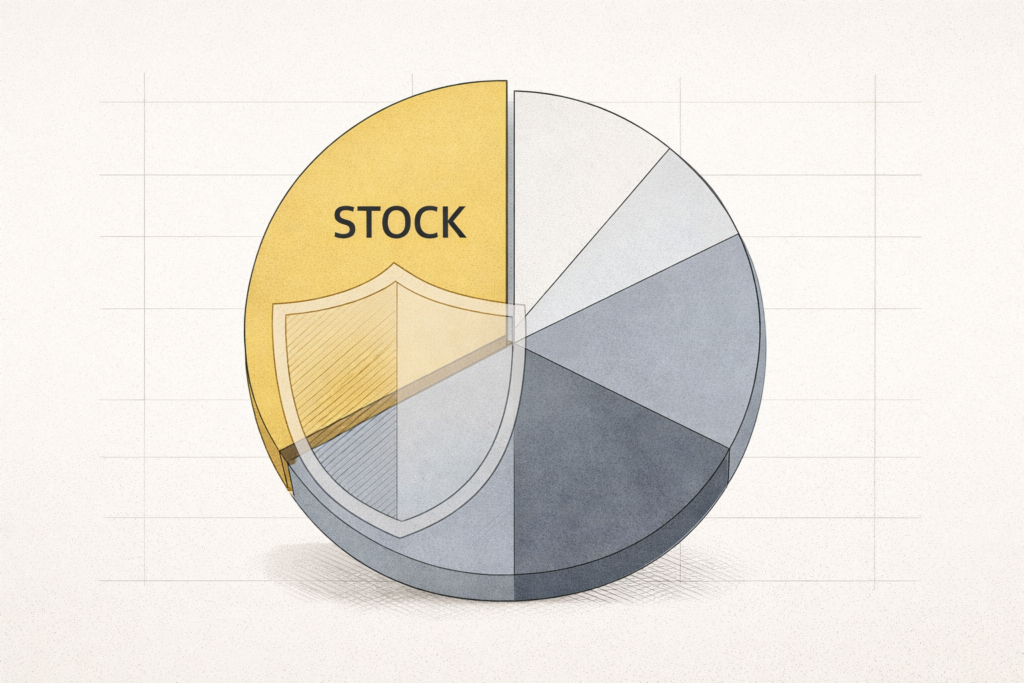
Protecting concentrated stock is a concern for many executives, especially when a large portion of their wealth is tied to a single company.
Whether it’s due to tax considerations, trading windows, or long-term conviction, the solution for risk managing a concentrated stock position is not always as straightforward as selling shares and reallocating.
In these cases, alternative approaches may help reduce downside exposure while maintaining ownership.
Understanding the Tradeoffs
A concentrated position can create both opportunity and risk. While continued upside participation may be appealing, a sharp decline can materially impact overall wealth.
When the goal is continued wealth creation, risk cannot be completely eliminated. However, risk can be managed through thoughtful alignment with personal and financial objectives.
Hedging Techniques to Consider When Protecting Concentrated Stock
Certain hedging strategies may offer downside protection without requiring an outright sale of shares. These strategies can involve significant costs, complexity, and may not perform as intended under all market conditions.
Common structures include:
- Protective puts, which may help limit downside beyond a certain level
- Collars, which combine downside protection with capped upside participation
- Variable prepaid forward contracts, which can provide liquidity while deferring sale
- Exchange funds, which may diversify exposure over time
Each strategy involves tradeoffs including cost, liquidity constraints, counterparty risk, and potential tax implications.
Integrating Risk Management Into a Broader Plan
Managing concentrated stock risk is rarely a single decision. It often works best as part of a coordinated strategy that evolves over time.
Executives may consider how hedging aligns with:
- Future liquidity needs
- Retirement timing
- Tax planning considerations
- Estate and legacy objectives
Protecting concentrated stock in this way becomes less about reacting to market movements and more about structuring flexibility.
Ultimately, the appropriate approach depends on a range of factors, including personal goals, risk tolerance, company policies, and regulatory considerations.
If you would like to learn more about how these concepts may apply to your situation… Contact Spectrum Asset Management
–
Disclaimer: This material is for informational and educational purposes only and should not be construed as investment, legal, or tax advice. All investing involves risk, including the potential loss of principal. Consult your financial, legal, and tax professionals regarding your personal circumstances. Nothing herein constitutes an offer to enter into an advisory relationship. Spectrum Asset Management, Inc. (SAM) is an SEC-registered investment adviser headquartered in Newport Beach, California. SAM is not affiliated with any other firm using a similar name.
*: Third-Party Website Disclosure: Links to third-party websites are provided for informational purposes only. Spectrum Asset Management, Inc. does not control or endorse the content of external sites and is not responsible for their accuracy or completeness.